
A timeline of significant ACAL events
Links are typically VOCEDplus or ACAL resources.

1970s
Recognition of literacy issues amongst the adult population.
1974
Kangan Report, proposes that the TAFE system include literacy in offerings.
1976
Australian Council for Adult Literacy (ACAL) established
From the Constitution: The Australian Council for Adult Literacy was established in Adelaide on 28th October, 1976 by the Working Party on Adult literacy of the 1976 National Conference of the Australian Association of Adult Education.
1977
First National Conference of the Australian Council for Adult lIteracy
Judith Goyen’s Sydney based study, Adult illiteracy in Sydney, one of the first studies of contemporary adult literacy in Australia.
1980
Adult literacy: Some Australian papers by AJA Nelson published.
1982
Adult literacy provision in Australia: Trends and Needs by Darryl Dymock published by ACAL.
1985
Readings in Adult Basic Education was published by ACAL. The plan was that it would be an annual production while Literacy Link remained quarterly.
1988
Good Practice appeared for the first time as the result of ACAL’s successful advocacy to DEET for the ALBE field. Nineteen issues were produced.
1989
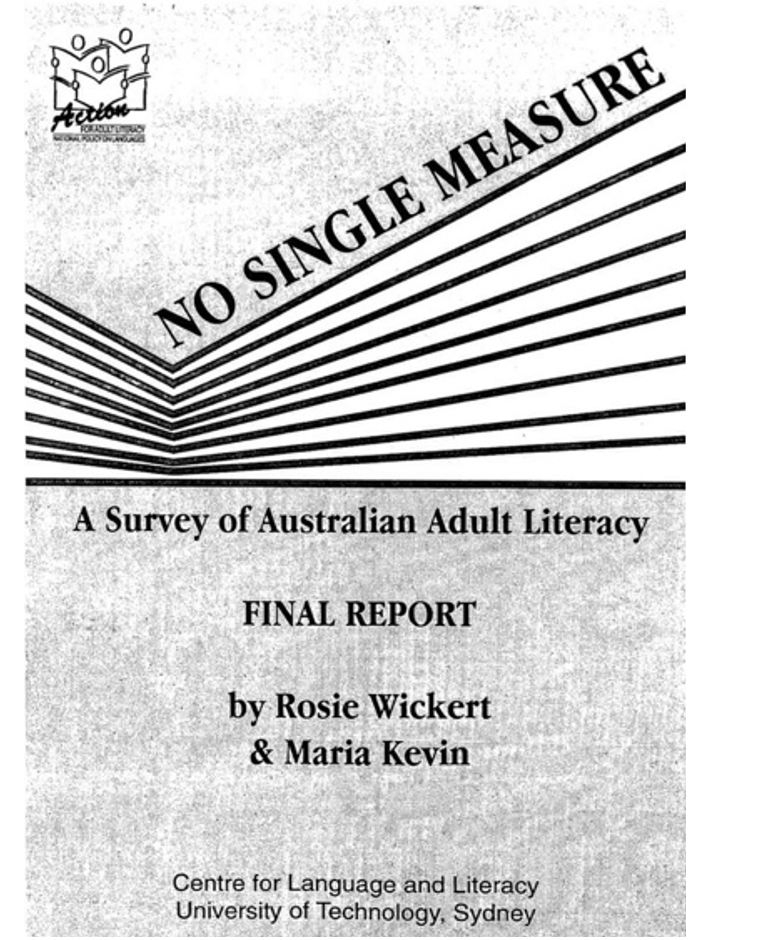
First Australian survey of the literacy proficiency of 1,500 Australian adults: No Single Measure (Rosie Wickert).
1990
International Literacy Year – Australian Patron, Margaret Whitlam.

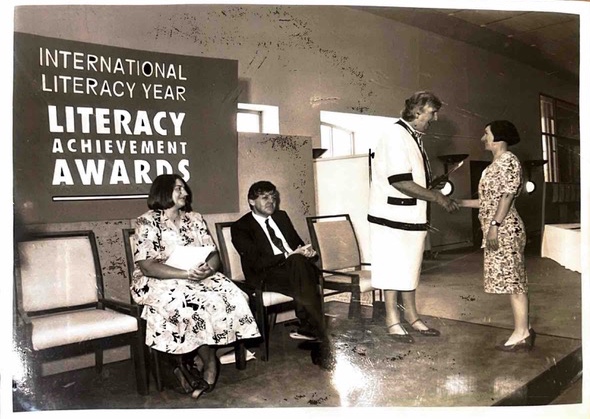
ACAL President Rosa McKenna receiving a certificate from Margaret Whitlam (Patron of ILY) at Parliament House, Canberra. Margaret W hitlam, John Dawson and Victoria rep (DETYA) 1990.
The certificate was for the policy award in the International Year of Literacy. In 1996, along with colleagues Rosie Wickert, Sharon Coates, and Nicole Gilding, ACAL leaders attended several international conferences to showcase the Australian approach.
1992
Establishment of Workplace English Language and Literacy (WELL) program by Commonwealth.
Literacy Update, DEET newsletter advertising Commonwealth-funded initiatives.
First 3-year funding cycle of the Language Australia Adult Literacy Research Network (ALRN).
1993
National Ministerial Council approved a National Collaborative Adult English Language and Literacy Strategy (NCAELLS).
Flyer The ACAL Charter was produced.
1994
Commonwealth funds the Special Intervention Program (SIP) program for unemployed adults, resulting in growth of literacy and numeracy program delivery.
1996
Second 3-year funding cycle of the Commonwealth funded Language Australia Adult Literacy Research Network (ALRN).
International Adult Literacy Survey (IALS).
1997
Literacy And Numeracy Training (LANT) program introduced by the Commonwealth.
Commonwealth funded the Workplace Communication project through ANTA to incorporate literacy and numeracy into training package units.
First html format edition (web version) of ACAL’s publication ‘Literacy Link’ produced.
1999
Adult Literacy and Numeracy Australian Research Consortium (ALNARC) Commonwealth funded national research network (3 years funding).
2001
Occasional paper – Literacy and lifelong learning; social justice for all? (June)
ACAL Campaign Paper: Surveys and Beyond: The case for adult literacy
Commonwealth Language Literacy and Numeracy Program (LLNP) introduced
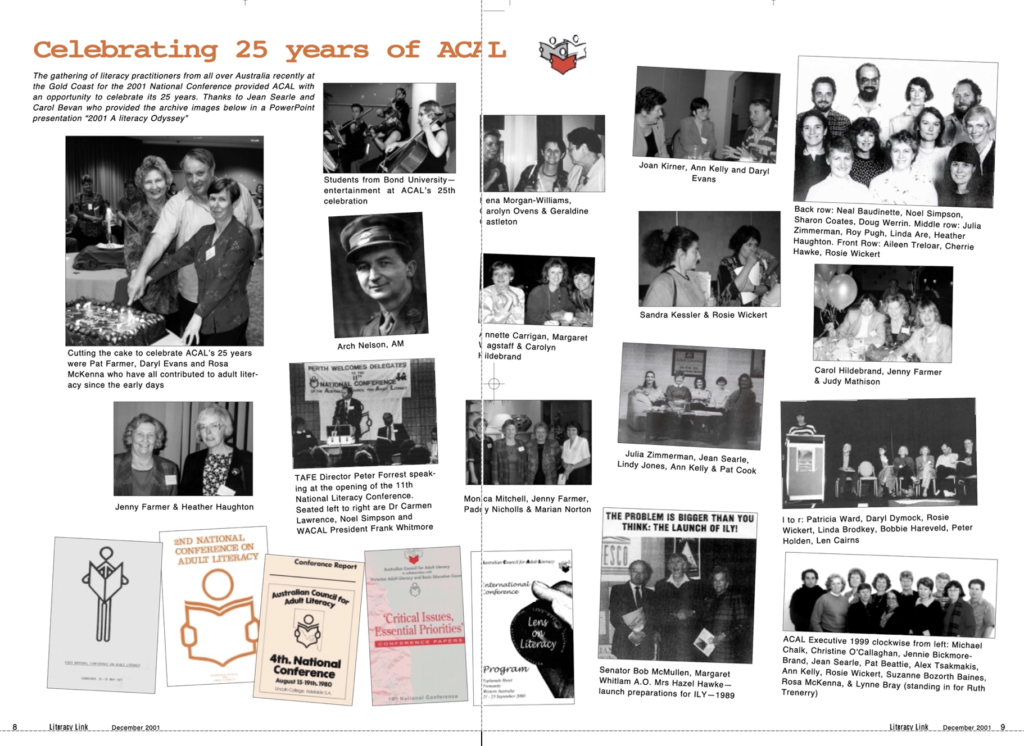
ACAL celebrates 25 years with a special issue of Literacy Link (PDF) Includes pics and a birthday cake!
Can you spot Margaret Whitlam and Hazel Hawke?
Click or tap to enlarge these pics
2002
Literacy Link article: ‘How useful do teachers find the NRS?’
2004
ACAL Submission to Senate Inquiry into the progress and future directions of life-long learning (June)
ACAL response to discussion paper: TAA Advanced Diploma of LLN practice (June)
2006
Adult Literacy and Life Skills Survey (ALLS)
ACAL Position paper: Moving forward: Towards a Literate Australia
Connecting voices in adult mathematics and numeracy: practitioners, researchers and learners
Three organisations joined together for this conference – Adults Learning Mathematics, Australian Council for Adult Literacy (ACAL) and the Australasian Bridging Mathematics Network (BMN).
2007
….. and literacy beyond the classroom paper published
ACAL Media Release, Adult literacy – a crucial part of the education revolution, ACAL Community Education and National Reform Discussion Paper.
2009
Literacy Link article: ‘No national spotlight on adult literacy’.
2011
Industry Skills Councils release ‘No more excuses, an industry response to the LLN challenge’.
2012
National Foundation Skills Strategy for Adults launched.
National Year of Reading.
ACAL’s Response to the LLNP Discussion Paper (September).
ACAL’s Response to the National Foundation Skills Strategy for Adults (November).
2013
2014
Workplace English Language and Literacy Program evaluated/closed
Industry Skills Fund (ISF) introduced;
Reviewed – Skills for Education and Employment (SEE) and Adult Migrant English Program (AMEP)
2016
ACAL, NCVER and UTS partner on project to build the practitioner research capabilities by mentoring practitioners to plan and write literature reviews.
Resilience: stories of adult learning An anthology of adult learner stories with RaPAL and Festival of Learning.
2017
ACAL’s Response to VET Fee Help discussion paper.
New contracts for SEE and AMEP commence.
ACAL Position Statement on The issue of literacy and numeracy training in the workplace.
NAIDOC – designated year – Our Language Matters.
2018
ACAL is represented on the Education Industry Reference Committee and the Foundation Skills Project Working Group.
ACAL signed an MOU with Adult Learning Australia (ALA) to work together on joint issues.
ACAL Position Paper on the TAE80113
2019
ACAL policy position proposal to the House of Representatives Standing Committee on Employment, Education and Training inquiry into Adult literacy and its importance.
“Don’t take it as read,” is subsequently published by the Committee.
ACAL lobbied the Federal Government to advocate for Australia’s participation in the next cycle of Programme for the International Assessment of Adult Competencies (PIAAC).
2020
2021
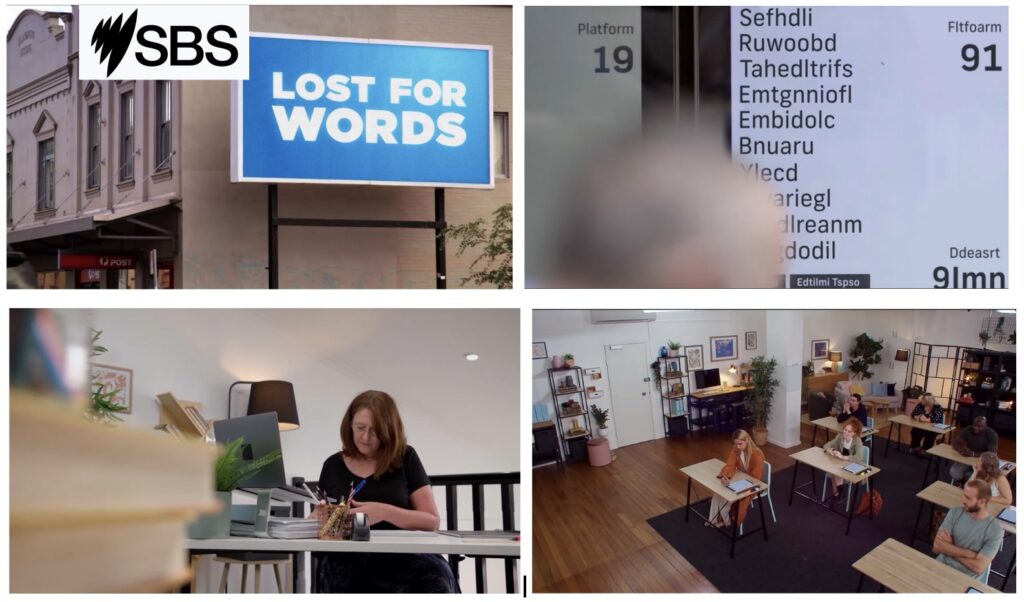
ACAL President Jo Medlin took on a key role in the three-part SBS documentary Lost for Words, highlighting the experiences of eight adult learners in an intensive literacy program.
2022
ACAL announced results of its survey about the public interest in adult literacy in Australia
ACAL is represented on Minister O’Connor’s National Foundation Skills Advisory Group
2023
ACAL is represented on the Reading and Writing Hotline Steering Committee, TAE/FSK Technical Reference Group and Jobs and Skills Australia (JSA) Foundation Skills Advisory Group.
2024
ACAL advocates for a specific ANZSCO code for Foundation Skills Teacher (or Adult Literacy and Numeracy Teacher) occupations.
ACAL highlighted a need to destigmatise the terminology used in relation to adult literacy challenges, calling on people to avoid deficit references such as “illiterate” and to choose words with care.
2025
DEWR released the National Foundation Skills Strategy 2025–2035.
ACAL launches its Reflect Reconciliation Action Plan (RAP) at the AGM.
ACAL met with Minister Giles and his advisors to discuss National Foundation Skills Strategy (NFSS), the No Wrong Door approach, and the value of strengthening the field.
ACAL is represented on the JSA Foundation Skills Study Steering Committee.