ACAL Life Members
Photo by Tom Hermans on Unsplash
Rosie Wickert
Dr Ann Kelly
Heather Haughton
Rosa McKenna
Jim Thompson
Margaret McHugh
Geri Pancini
Dr Keiko Yasukawa
Kita Scott
Kathleen White
Dr Bob Boughton
Pamela Osmond
Lorraine Sushames
We will be adding to this page throughout the year.
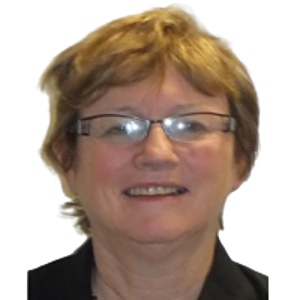
Bio - Dr Ann Kelly
Bio
After finishing an education degree in my early thirties, I began working, first part-time and then full-time, as an adult literacy teacher and manager at the South Brisbane College of TAFE (now Southbank Institute of TAFE). It was a time when we not only conducted classes on site but also engaged in outreach provision, including at an indigenous centre and St Vincent de Paul Society hostel. There were three of us in that role in Queensland at that time, with more appointed statewide during the 1980s. I stayed at Southbank TAFE, although I was seconded and chose to take up other positions for fixed terms, until the end of 2007 when I began employment as a lecturer at Griffith University.
The 1980s were a flowering period for two other adult literacy initiatives. In the early years of this decade, I was a member of a group of people who worked together to establish the Queensland Council for Adult Literacy. I continued to be involved in various executive positions in this organisation until it was disbanded in 2023. In the 1980s, I also attended an ACAL conference in Melbourne and at various times over the following years I was the Queensland representative on the council. Between 1996 and 1998 I became the ACAL President. At this time, we were asked to join with four other literacy and English professional associations to liaise with Government. I became the chair of this new body, the Australian Literacy Federation, and gained a deeper understanding of the various ways these voluntary organisations worked to provide professional services to their members.
I am very pleased to be still involved with ACAL as a co-opted member of the executive. Currently, I am working with Debra Urquhart on a survey to learn how teachers are now designing and implementing programs to meet adult students’ pedagogical literacy and numeracy needs in the context of many shared EAL and adult literacy contexts.
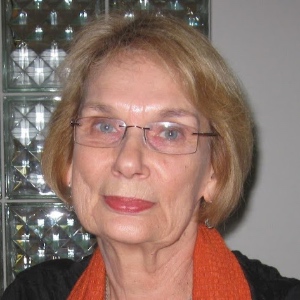
Bio - Pamela Osmond
Bio
I was among the first of the adult educators to be employed in the new field of adult literacy in Australia in the late 1970s, when it became officially named and recognised as a field of education. I believe I was one of the last of those pioneers to retire from the field some 45 years later, having worked in the field in some capacity almost continually over those decades.
I had initially trained and worked as an English/History teacher. However, my introduction to the world of reading education came with my employment as research assistant on a reading research program at the Riverina College of Advanced Education (RCAE). I found this immensely interesting and was encouraged to enrol in the Graduate Diploma Educational Studies (Reading/ Language) at RCAE. This was an exciting and ground-breaking place to study and work in this period.
In 1979 I was appointed TAFE Adult Literacy Officer for the Riverina region, becoming one of the first permanent employees in this newly minted field of adult literacy. The position involved developing and managing volunteer tutor programs in a very large region in south-west NSW. There were no resources available to this new discipline, apart from those being imported from the UK, so my small band of NSW colleagues and our counterparts in other states set about creating this body of new professional practice knowledge.
There followed a career in TAFE as adult literacy teacher and a range of middle management positions. On retirement from full-time employment in TAFE, over the next decades I undertook a number of projects involving curriculum work and resource development. I have authored and co-authored a wide range of teaching/learning resources, including So You Want to Teach an Adult to Read? and Literacy Face to Face.
This post-TAFE career also involved employment at the University of Technology Sydney (UTS) as teacher educator and working on the Graduate Diploma of LLN Practice at TAFE Digital.
One of the highlights of my career has been my connection with the Reading Writing Hotline, having served in a management role at several times during the Hotline’s long and vitally important existence. In 2024, at the Hotline’s 40th birthday celebration, I was privileged to be given the award of Adult Literacy Legend by the then Minister for Skills & Training, Brendan O’Connor.
In 2018 I completed a masters degree at UTS, with a thesis titled Adult Basic Education in NSW 1970–2018: Official stories and stories from practice. Research for the thesis was a rewarding experience and reminded me that we work in a field with a rich and interesting heritage – one that must not be forgotten as the field faces the multiple challenges of this era. The thesis was later published by Routledge under the title Developing Social Equity in Australian Education.
I have served on the executive of both ACAL and NSWALNC for many years and have felt it an immense privilege to serve as an advocate for our field and the students it serves.
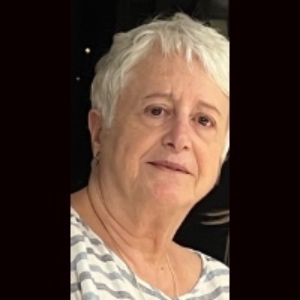
Bio - Geraldine Pancini
Bio
Years ago, when I became an ACAL Life Member, Keiko Yasukawa, wrote an acknowledgement about my time as ACAL President. There is no way I could describe myself, or my work, or my commitment to the importance of advocacy, policy, and professional development in our field as beautifully as Keiko does here. Thank you, Keiko.
Geri Pancini, ACAL’s immediate past President has tendered her resignation from the ACAL Committee, due to her mounting commitments in her workplace. Geri was ACAL President during 2009-2012, a critical period for the adult literacy and numeracy community. She came into her role at the beginning of national discussions about a new national policy for adult literacy and numeracy which became the National Foundation Skills Strategy for Adults. As many ACAL members would be aware, participation in policy processes, particularly as a representative of a peak body organisation, is riddled with challenges. Geri led us through this period with a rare combination of integrity, diplomacy and care that ensured that ACAL was recognized as an important stakeholder in these discussions, but in a way that enabled ACAL to say what ACAL needed to say, even if our view was not always aligned with those of other powerful stakeholders.
It is a privilege to make a public statement of appreciation and recognition of a teacher, researcher, colleague, advocate and activist like Geri. While Geri’s CV is impressive – her three Master’s degrees and her doctoral candidature, her appointments at numerous institutions as teacher, researcher, project manager and lecturer, her research and curriculum projects, her publications, and more – it is Geri’s way of working with and drawing in people and her generosity in the way she shares her knowledge and insights that have served ACAL as an organization so well, and powerfully. Often Geri appeared very self-effacing about her knowledge of the ins and outs of various policy debates occurring at the time, but Geri knew what was most important to know about. It was her uncompromising principled position about the role of education in advancing social justice, her critical literacy about the dominant ideology surrounding us, and her respect for learners and teachers that enabled ACAL to maintain its integrity and profile as a professional peak body that is concerned with adult learners and the practitioners who work with them.
The ACAL community is grateful for and proud to have benefitted from Geri’s leadership during her presidency, and hope to have her continued engagement with our work, in whatever capacity she is able. We are honoured to be able to have Geri as our Life Member.
3 August, 2014
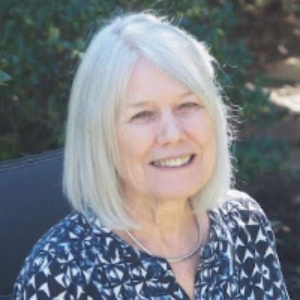
Bio - Rosie Wickert
Bio
What an achievement ACAL! Fifty years and still going strong, if not stronger than ever. I was a member of the Executive of ACAL in varying roles for seventeen years from 1987 to 2004, including President and Vice-President.
My life as a teacher and researcher of literacy and numeracy skills began in the early 1970s in a college of further education in East London. This was before the term adult literacy emerged and we were known as general studies teachers. We had great freedom then but this was gradually constrained by the Thatcher administration as general education programs became more focussed on unemployed youth rather than trades apprentices.
I came to Australia in 1982 and started teaching in evening colleges and TAFEs across Sydney while completing the Graduate Diploma in Adult Literacy and Numeracy at what was then the Institute for Technical and Teacher Education, ITATE, later becoming part of UTS. I joined UTS in 1989 and took over the running of that course. I also established a research and development Centre for Language and Literacy. They were heady days. 1990 was International Literacy Year and I was privileged to be a member of the National Consultative Committee for International Literacy Year, chaired by Margaret Whitlam and included luminaries such as Joseph Lo Bianco and Julian Disney. The work of that Council covered a tumultuous time with the preparation and delivery of the 1991 Australian Language and Literacy Policy. This was followed by the multiple national projects that emerged from that policy commitment. ACAL was a major player during that time and influenced the direction of many projects. Although the Keating government of the day made a relatively small financial commitment to this implementation, the impact was significant. I have fond recollections of my partner, Tony, directing some of the episodes for the TV series Fresh Start.
My most treasured memories of my time with the ACAL Executive however are the friendships made. I served with the likes of Heather Haughton, Noel Simpson, Sharon Coates, Rosa McKenna and Aileen Treloar from Victoria, Julia Zimmerman and Jean Searle from Queensland, Roy Pugh from Tasmania, Linda Are and Nicole Gilding from SA, Doug Werrin and Marie Persson from NSW, Jim Thompson from WA and Lorraine Sushames from the NT who I believe has only just retired. Fabulous people and good friends who put in countless hours to help build the field of adult basic education into what it is today. I donated all my records to the NSW State Library. I wish ACAL a long and distinguished future.
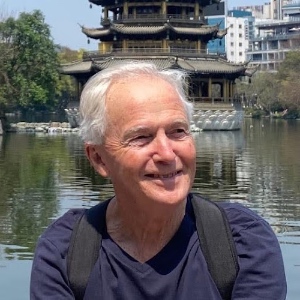
Bio - Bob Boughton
Bio
I have the independence movement in Timor-Leste to thank for bringing me into adult literacy education in 2004. In September of that year, the newly independent country – still suffering from the ravages of Indonesia’s 24-year military occupation – held its first national adult literacy conference in the capital, Dili. The main organisers were a group of young activists who had been part of the clandestine resistance in the 1990s. They identified as popular educators in the tradition of Paulo Freire, and sought support from the new FRETILIN-led government to mount a national adult literacy campaign. My invitation to their conference , from Oxfam, was based on research I had done in the 1990s on the links between adult literacy campaigns and improvements in population health.
That conference changed my life, and that of my wife, comrade and colleague Deborah Durnan. For the next ten years we became involved with the campaign it initiated. This meant working with an extraordinary group of Cuban literacy educators, who had come to Timor-Leste to help the government implement the national campaign, using a method developed by Cuban experts for countries of the Global South, known by its Spanish title, Yo Si Puedo (Yes! I Can!).
In 2010, we attended our first ACAL conference, held in Darwin, to tell the story of that campaign with our Timorese colleague, Antero Benedito Da Silva. The following year, working with First Nations colleagues, we secured funding to trial the Cuban model in First Nations communities in Australia. The 2012 ACAL conference in Hobart was the first place we presented the initial results. The overwhelming support from delegates was incredibly gratifying and encouraging, especially since we were latecomers to the organisation, by then entering its fourth decade.
The rest, as they say, is history. The First Nations adult literacy campaign that began in Wilcannia in western NSW in 2012 is still running, under the leadership of a First Nations organisation, the Literacy for Life Foundation (LFLF), and its achievements appear regularly in ACAL newsletters. Hundreds of First Nations adults with minimal English language literacy have benefited. Just as importantly, in every community that has sponsored a campaign, the Foundation has trained a cadre of local Indigenous literacy educators who continue to provide leadership and advocacy long after the campaign has moved on.
ACAL was an integral part of this process. It gave us a forum to dialogue with other practitioners and researchers about our work, and it joined us in advocating for Commonwealth and state governments to recognise the specific needs of First Nations communities: adult literacy education under their control, with teachers they chose, using the Cuban-designed method they had embraced.
Every graduation was a high point, but even though it was more prosaic, I want to mention the Parliamentary Inquiry into Adult Literacy which reported in 2022. Both the Foundation and ACAL made strong submissions for a new approach, calling for an end to the ridiculous assumption of the SEE program, that VET-system Foundation Skills courses could deal effectively with the issue. My only regret is that, despite a significant victory with a specific funding allocation for non-accredited programs in First Nations communities, the government and the majority of stakeholders still refuse to embrace the solution we recommended – a national First Nations community-controlled adult literacy campaign.
I remain an Adjunct Professor at the University of New England, having retired in 2020, but I maintain my links to the field through ACAL and LFLF. I want to thank ACAL for honouring me with a life membership, and to congratulate the organisation on its fiftieth anniversary. As they say in Timor-Leste, A luta continua! The struggle continues.
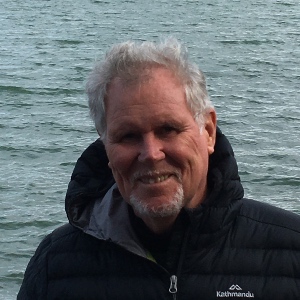
Bio - Jim Thompson
Bio
Like many literacy and numeracy educators I began my involvement as a school teacher. Firstly, as a secondary maths and science teacher and then shifting to primary education. I worked in alternative schools in Fremantle, Western Australia where students engaged with the local community to develop their literacy and numeracy skills through real life learning activities. After 11 years as a teacher and Coordinator/Principal of the Lance Hotel School I moved to the WA Adult Literacy Bureau where I developed workplace literacy programs and trade-based literacy and numeracy materials for the West Australian juvenile justice system.
As the state’s representative on the Adult Literacy and Basic Education national committee I contributed to a range of professional development programs and implemented the Adult Numeracy Teaching course in WA.
Western Australia’s adult literacy course was outdated. I was given the task of reviewing other state and territory curricula to see if there was one which met the needs of WA adult students. As a result, I was responsible for the implementation of the Certificates in General Education for Adults (CGEA) from Victoria. The curriculum was appealing to WA adult teachers because of its flexibility, different levels of attainment and emphasis on moderation of assessment. With the support of the Department of Training, I established a statewide moderation system based on the TAFE regions including the Ministry of Justice and other providers. The moderation network provided regular professional development for adult literacy and numeracy teachers across WA.
In the late 1990’s and early 2000’s I represented the WA Adult Literacy Council (WAALC) on ACAL. I was ACAL President in 2003-2004. We organised state and national conferences with a focus on making ACAL seminars and conferences available to practitioners in more distant parts of Australia. We made successful submissions to the Commonwealth Department of Education and Employment for funding to run these events. I represented ACAL on Commonwealth committees to select recipients for national adult literacy and numeracy funding. These covered a wide range of innovative curriculum projects. It was stimulating to work alongside leading national educators and to help share their knowledge and skills with all states and territories.
In the latter stages of my career, I was a Program Manager at a large WA TAFE college responsible for a diverse range of programs which focussed on developing literacy and numeracy skills for students in access programs. These included youth at risk, English as Additional Language, students with mental health issues, students with intellectual disabilities, juvenile offenders, women returning to study, and flexible courses enabling literacy and numeracy teachers to work alongside vocational lecturers in workshops and classrooms.
It has been a great privilege to work in these areas in my working life and an honour to be a made a life member of WAALC and ACAL. I’m continuing my involvement in areas of need by volunteering as a musician with the Starlight Hotel Choir, a singing group based in a homeless support centre in Fremantle.
I continue to follow with interest developments in the field.
Jim Thompson
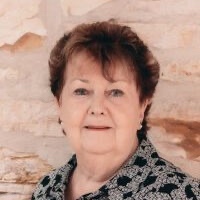
Bio - Lorraine Sushames
Bio
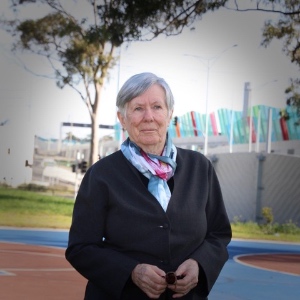
I first engaged with the adult literacy field in the early 1990s as an accidental entrant from the discipline of creative and applied arts. Interest was fuelled during my studies in the Bachelor of Teaching, Adult/Vocational, where course readings included articles by Luke and Freebody, the No single measure: summary report (Wickert, 1989) as well as inspiring journal articles and papers associated with UNESCO’s International Literacy Year (1990) – it was “an era of enthusiasm” (Evans, 1988). The foundations of my career were built on Freirean philosophies and humanist professional discourses about individualised needs-based approaches. It was a time of investment in providing relevant professional development for teachers that emphasised teaching practice. One such was the Adult Literacy Teaching (ALT) course. It was too good an opportunity to miss, so I enrolled, despite the timing being less than ideal – being midway through a Masters’ Degree at the time. I became more active in the adult language and literacy field in early 1994, as a literacy assessor in the Commonwealth Special Intervention Program (SIP), subsequently going on work as a specialist in a range of other nationally funded programs over time. Since then, I have written submissions and tenders for adult literacy programs, managed and taught into adult literacy programs, designed, developed, evaluated and reported on adult literacy programs, prepared others to teach in the adult literacy field, and researched and published about adult literacy. I became the Northern Territory representative to ACAL in 2002, connecting with colleagues nationwide, and three years later was elected to my current role of Treasurer. I particularly value the commitment of my ACAL counterparts in contributing to adult literacy nationally, and internationally. Through ACAL, many opportunities have arisen to support the field through various advisory roles, and to lead the team responsible for the development and implementation of ACAL’s Reconciliation Action Plan – a three year marathon. Adult literacy pedagogy, and its application within disparate organisations such as industry, Defence, charities, universities, RTOs and community groups supporting diverse learning needs has remained an ongoing focus. A strong sense of justice and purpose influences my advocacy work, towards the use of plain language in all forms of communication, as well as supporting a move away from one size fits all literacy programs, to a more individualised approach. My interest in post conflict education and trauma informed approaches was stirred when in 2006 I began to engage in capability development programs for learner cohorts from Timor-Leste, developing programs to build capacity across identified knowledge and skills gaps. Since leaving academia in 2021, I established a consultancy offering a range of services to the public and private sector, non-government and community organisations. A personal passion is building an evidence base through research to guide policy towards improving access to adult literacy programs in very remote parts of Australia.
Bio - Rosa McKenna
Bio
I was thrown into adult literacy when teaching at Tottenham Technical School in Melbourne’s west during the 1970s. Confronted with dysfunction and violence, we responded to students’ needs by adopting a community development approach and offering services to families. I attended a workshop by Paolo Friere after the publication of Pedagogy of the Oppressed. This marked a shift in my thinking about learners and learning, moving from straightforward didactic teaching to recognising learners’ knowledge of the world and their own agency, and understanding that language itself is a social construct. I became the coordinator of a community program, then of a state regional network that established eleven community adult education programs, and eventually a national coordinator with the National Language and Literacy Institute of Australia, supporting early praxis research and a professional learning network, before establishing a consultancy with Lynne Fitzpatrick. I spent the final chapter of my professional life in the Northern Territory.
Within that Freirean framework, I joined the Victorian Adult Literacy and Basic Education Council, then represented Victoria on ACAL, and took on numerous executive roles in the 80s and 90s. It was an exciting time when, at both state and national levels, adult literacy and numeracy were recognised as separate but interconnected fields of education. Australia, for a period, led the world in research and innovation. Socio-linguistic approaches thrived, expanding teaching and learning beyond informal welfare models to include integration into the labour market, post-secondary education, and workplaces.
My moment of pride came when I accepted, on behalf of ACAL, the 1990 policy award in the International Year of Literacy from Margaret Whitlam. In 1996, along with colleagues Rosie Wickert, Sharon Coates, and Nicole Gilding, ACAL leaders attended several international conferences to showcase the Australian approach. These women, together with other ACAL delegates, went on to lead innovations in higher education, vocational training, and state systems. These years marked the peak of ACAL’s collaborative effort to successfully campaign for a national adult literacy plan to address the literacy and numeracy levels of adults, driven by the economic costs identified in international and national literacy studies. These strategies prompted the development of a skilled workforce, the expansion of accredited university programs, and increased delivery of services into workplaces, labour market initiatives, and community organisations. These innovations are now embedded within state and national systems and are somewhat invisible.
In 2004, I took on a policy role with the Northern Territory Education Department and became deeply involved in the complex issue of limited participation and poor outcomes for Aboriginal children. I managed a longitudinal study, Evaluation of Literacy Approaches for Indigenous Children. When this research was quietly shelved, I served as principal of Yirrkala Community Education Centre, a bilingual community school in North East Arnhem Land. I was privileged to work briefly with Yolngu in an educational setting established by Dr M Yunupingu AC, focusing on ‘both ways’ education and applying the lessons from the research. In 2012, I was invited to put these principles into practice by setting up an adult training centre in Wadeye as part of a human rights case.
I have come full circle, retiring in 2015 and returning to the western suburbs of Melbourne, family, community life and activism. 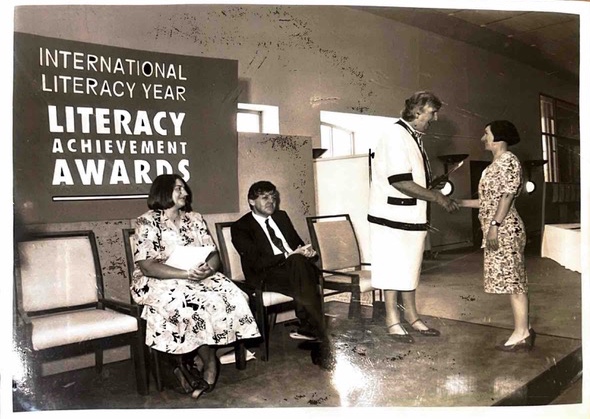
ILY presentation to ACAL at Parliament House, Canberra. Margaret Whitlam, John Dawson and Victoria? (DETYA) 1990
Bio - Kath White
Bio
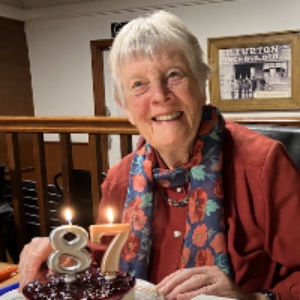
After working as a high school teacher of English in Victoria and NSW for fourteen years, I joined NSW TAFE in 1975 and was caught up in the heady legacy of the Whitlam years when we were invited to initiate opportunities for Australian-born adults to access open education. In response, Sydney Tech started the ILC (Individual Learning Centre, a drop-in centre for basic English and Maths) and here our preconceived methods were challenged by non-literate students.
Accordingly, over the long holidays 1976-77, I visited the UK to learn more about the BBC’s pioneer adult literacy program. I came back in February to be appointed TAFE’s first ALO (Adult Literacy Officer) and used the BBC philosophy and training program as our blueprint.
Other states had also been experimenting, so when we very new practitioners gathered at the first ACAL National Conference in Canberra in May, 1977, it was urgent that we hammer out basic principles for this new field. In a seminal final meeting, the principles of confidential and flexible learner-directed delivery free from bureaucratic requirements were affirmed.
By the end of 1977, TAFE had appointed ALOs in regional areas; we were using TV and radio to advertise our programs where confidentiality was key, and we had constant enquiries. A lot of that success was due to the support of visionary TAFE Directors and key politicians, who saw that state resources should be shared by all providers, whether statutory or voluntary.
As the numbers of paid staff, adult learners, volunteers and enquirers grew, it became obvious that we needed some central body to coordinate, resource and train the work. In 1979, I was appointed the founding Coordinator of the Adult Literacy Information Office, located in Redfern, Sydney, with the brief to support and resource all providers. The office was always a buzz of people, phone calls, meetings, coffee, photocopying and sending out book boxes, etc. It was a great place, a hub for practitioners to meet and exchange ideas. We started the Broadsheet for NSW people, and distributed Literacy Link, ACAL’s newsletter.
The ACAL connection was very important to us, because we could exchange materials and ideas with interstate colleagues, and the Annual ACAL Conference was a highlight of our year. The students had formed themselves into an informal organisation, and they planned and presented the student stream at the national conferences, held in each state capital in turn. From the very first ACAL conference in 1977, it was our practice at each conference to have an international speaker who could broaden our horizons.
In 1977, I completed a MEdAdmin degree through UNE, submitting a research thesis, Volunteerism and Bureaucracy, as my major work. I took up this theme again in 1984, when, as a Churchill Fellow, I travelled overseas for four months to investigate adult literacy programs in voluntary organisations. My report was entitled Voluntary Action in Adult Literacy Work.
Two years later, I resigned from ALIO and left to work as a volunteer consultant for Non-Formal Education, with adult literacy (Nepali , of course) as its key to national development (at that time the official literacy rate was 34%). In 1990, we produced a series of graded reading books based on the Language Experience method, which I had learnt at the ACAL Melbourne Conference! These books won the 1996 UNESCO prize for the best literacy readers in Asia-Pacific – a great tribute to our field staff.
Returning to Australia in 1994, I became involved in migrant teaching through local churches, and in 2001, I was honoured to receive an Order of Australia award (AM) for “service to education, particularly in the field if adult literacy, through the NSW Adult Literacy Information Office and the Australian Council for Adult Literacy.”
In 2010, I moved to Albury-Wodonga to help as a volunteer to help with the settlement of newly-arrived Nepali-background Bhutanese refugees. And this is where I am now, still doing the thing I love – teaching as a volunteer, now through U3A (University of the Third Age).
Kathleen A. White, MA. MEdAdmin, MDiv, BEd, BDesign, Cert.TESOL
Bio - Paquita (Kita) Scott
Bio
Life Member, Australian Council for Adult Literacy
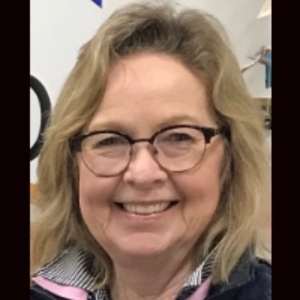
Paquita “Kita” Scott’s, 2016 award of Life Membership of the Australian Council for Adult Literacy, reflects a career marked by sustained impact, sector leadership, and a deep commitment to adult learners and the educators who support them.
With a career spanning more than four decades, Kita dedicated her professional life to improving literacy outcomes for adults from diverse and often disadvantaged backgrounds. Beginning as a community tutor in regional South Australia, she quickly developed a passion for empowering learners through language, numeracy, and critical thinking skills.
Kita commenced her work with TAFE SA in 2000 as an Adult Literacy Educator and went on to hold leadership roles until her retirement in 2017. During this time, she made a significant contribution to the delivery and development of language, literacy and numeracy (LLN) programs, supporting adult learners to build skills, confidence, and pathways into further education and employment.
Her expertise extended beyond the classroom into curriculum and system-level influence. She served as a Language, Literacy and Numeracy specialist on the English Learning Area Committee for the Senior Secondary Assessment Board of South Australia, contributing to the development and assessment of senior secondary education across the state.
In 2009, Kita was nominated for inclusion on the South Australian Women’s Honour Roll in recognition of her involvement in the Secret Codes Multi-Literacies Initiative within the Department of Further Employment, Science and Technology. This work highlighted her commitment to innovative approaches in adult literacy and her dedication to improving educational access and outcomes.
Throughout her career, Kita worked across community education and adult learning environments, supporting learners from diverse backgrounds to build confidence in language, literacy and numeracy. Her practice was grounded in a deep respect for adult learners’ experiences and a strong commitment to inclusive, learner-centred education.
Kita played a pivotal role in shaping adult literacy programs across Australia, contributing to curriculum development, teacher training, and national policy discussions. Her work was particularly influential in supporting First Nations learners, migrants, and workers transitioning through economic change. She consistently advocated for approaches that recognise and value the lived experiences of adult learners.
A long-standing and active member of ACAL, Kita contributed extensively to the organisation through leadership and service, including roles as state representative, conference convenor, and national executive member. She presented at conferences, published on adult education practices, and mentored many educators entering the field.
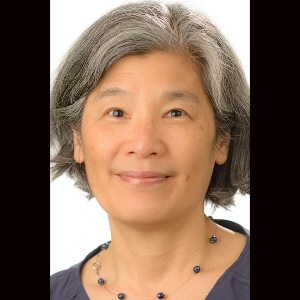
Bio - Keiko Yasukawa
Bio
I write this on the unceded land of the Cammaraygal people of the Eora nation in the land now known as Sydney. I pay respect to the Aboriginal people who are the traditional custodians of this land and acknowledge their continued connections to this land, waters and culture.
I was humbled by ACAL awarding me with a life-membership, and hope that my bio that I sketch below would justify this honour.
I first started to learn about ACAL when I started working at UTS in 1993. At that time, UTS was a vibrant and leading site for adult basic education professional education and research. The ABE team was led by Rosie Wickert who had, a few years earlier, published the groundbreaking No Single Measure report, and included colleagues Sheilagh Kelly and Betty Johnston who I had worked with and learned immensely from over the coming years.
I stayed at UTS for 32 years, and only retired in mid 2025. This is long after Rosie, Sheilagh and Betty had retired. I continued working in the area of adult numeracy—and increasingly in adult literacy as well, during my career at UTS. I cannot claim extensive experience as an ABE practitioner like many of the other esteemed life members, but I have tried to contribute to the field through my work as in the education of adult literacy and numeracy teachers, and conducting research in the field and sharing current international and Australian academic research with the practitioner community.
With the NSW Adult Literacy and Numeracy Council (NSWALNC) and UTS as co-hosts, I convened the 2013 and 2019 ACAL conferences and was able to bring leading international and Australian researcher to present keynote addresses. I was aware that practitioners do not have ready access (or time) to read new research and scholarship in the field, and it was my hope that bringing these researchers to the ACAL conferences would serve to expose practitioners to interesting current research—and importantly, for researchers to learn more about what was happening on the ground. I also initiated a project for ACAL with funding support from the NCVER and in-kind support from UTS to mentor practitioners in accessing academic literature and developing a literature review. The completed literature reviews were published by the NCVER.
I have completed a number of research projects which were certainly interesting for me, but which I hope were affirming of the value of the work that teachers do and the capabilities of the learners. One of them was the Making Connections project, conducted with Jacquie Widin and Andrew Chodkiewicz, which showed the different ways in which ABE teacher practices benefited the learners, not only in skills development, but also personally and socially. Steve Black and I researched practices around learner support nationally and workplace literacy and numeracy, both of which led us to challenge the reductionist and deficit discourses about adult literacy and numeracy that prevailed.
I continue to research and publish and hope that some of the work will be interesting and relevant for practitioners. Another important area of work I continue to do is contributing to the mentoring of the next generation of researchers in the field through the supervision of higher degree research students.
Watch this space for the next bio
Bio
Coming soon….