
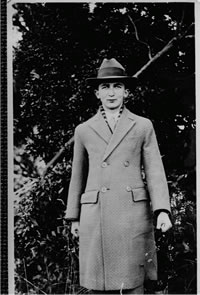
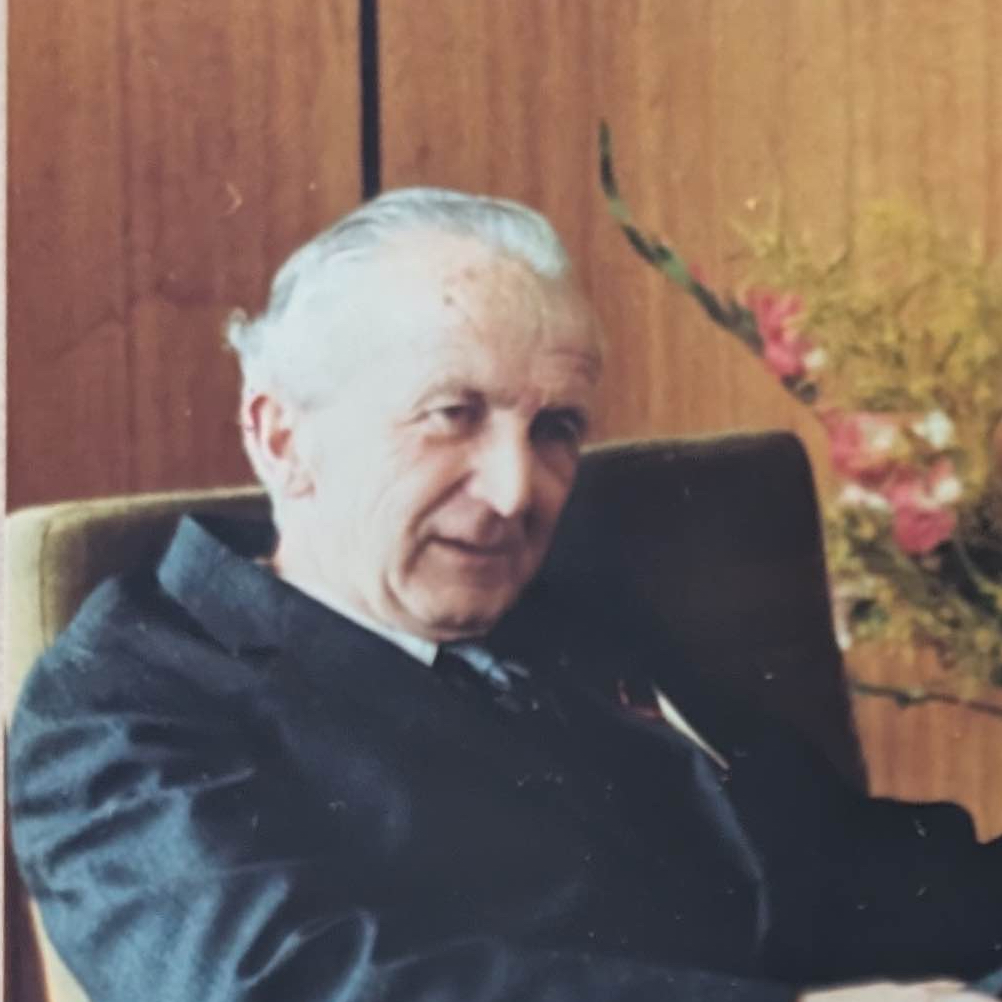
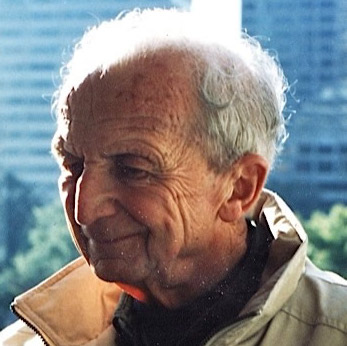
Arch Nelson AM
Adult Educator 1911-1988
Arch Nelson played a major role in placing adult education on the government and public agenda and he was inaugural Chairman of the Australian Council for Adult Literacy (ACAL). A pioneer of adult literacy in Australia, Arch is remembered with affection as a modest man who combined in his work, vision with tenacity and gentleness.
Remembering Arch
On Arch’s passing the University of New England, where he spent many years, published these tributes which provide an insight into his wider career and the esteem with which he was held by the wider education field.
Tribute by Dr Rob Robertson-Cuninghame (Former Chancellor)
Arch Nelson was a man who made an enormous contribution to the community, both locally and internationally. He was an individual of true integrity whose ethics, modesty and good humour were valued by those who knew him and he reached out to enrich the lives of people from many walks of life.
Like so many of his generation, Arch enjoyed a happy childhood in a rural setting at Scott’s Creek in South Australia where he was influenced by a loving family and a close-knit community. Even quite recently he recalled advice given by his much-loved Grandmother. His subsequent life certainly bore out one particular recommendation that stated: “Don’t be over concerned about yourself. Look after others. Selflessness is the key to happiness.”
To further his education, Arch had to move to the city of Adelaide. By the time he had completed a course at the Adelaide Teachers’ College he had matriculated and even covered several units towards a B.A. degree. For some years then, Arch was employed as a schoolteacher at various country schools while he completed his university course. He graduated with honours in 1938.
The year 1942 proved to be most significant for him as he had the great fortune and good sense to marry Erica; the beginning of a long and devoted time together. Just then, however, Australia was in grave danger and Arch enlisted in the RAAF. It is fortuitous that a colleague from the university contacted him and he transferred to the AIF as part of the Australian Army Education Service. Again it is fortunate that in this field he was associated with Colonel R.B. Madgwick. Arch was prominent in the development of discussion groups which widened people’s visions about current affairs. He had first to overcome literacy problems and, as he subsequently wrote, he realised that “literacy alone is not enough, we need to be concerned that we develop communities in which people can develop together as cooperating human beings”.
After the war Arch, while employed by the Australian Universities Commission, was involved with the Commonwealth Reconstruction Training Scheme in which so many ex-service people enrolled at university. He then spent two years in London with post-war reconstruction where he was actively involved with UNESCO before returning to a position with the Commonwealth Office of Education. His association with the New England region began in 1954, the year in which UNE became autonomous. Once again associated with Dr R.B. Madgwick, the then Vice-Chancellor, Arch Nelson was appointed to head Adult Education. Under his leadership, for a period of some 17 years, the department of University Extension flourished with the full support and involvement of the local community. Residential schools broke new ground as they were attended not just by people from the district but by many from distant places. Regional offices were set up in Tamworth, Lismore, Grafton and Port Macquarie. During periods of sabbatical leave, Arch was actively involved in the development of adult education in many overseas countries.
In 1971, in recognition of his distinguished contribution to his chosen field, A.J. Nelson was appointed Professorial Fellow by the University. At that time this was a unique position which freed him from administration so he could concentrate on research and teaching in Adult Education. He established a post-graduate diploma in his discipline and lectured extensively until his official retirement after some five years. Even then he continued to supervise PhD students while he undertook an active commitment to adult literacy. In addition to being a personal tutor, as the Chair of the Australian Council for Adult Literacy until 1984, he brought together a team of professionals and volunteers who assisted so many people to overcome problems.
During the period of his leadership in the field of adult education and community development, UNE developed a strong reputation both nationally and internationally in this area. It is indeed most gratifying to note that he has been honoured by the Carnegie Corporation, UNESCO, The Asian and South Pacific Bureau of Adult Education, The Australian Council for Adult Literacy and the Australian Government.
Though he achieved so much and influenced the lives of so many it must be remembered that this could not have happened without the loving and enduring support that he received from Erica. With his own high standards and tolerance, it is not surprising that, as a loving, proud and devoted father, Arch received loyalty from a united family. Those of us who were privileged to call him “friend” are indeed most fortunate, we extend our deepest sympathy to Erica, to Elizabeth, to Phillip and to the grandchildren.
Dr Rob Robertson-Cuninghame
(Former Chancellor)
A.J.A. Nelson -- The last of the community men by A/Professor J.S. Ryan
Something over two years ago Arch Nelson, from 1954 to 1971, first professional Director of Adult Education/ University Extension in this university, published his very selective autobiography, My Life as I Remember It, a modest musing, written arguably for his friends and relatives.
Now, some brief public tribute must be added, if only because of the unique university debt owed to him by us for: his remarkable region-arousing achieve-ments; his galvanising of local government and of all the new university’s teaching and research departments — beginning with the 1956 Clarence Valley program there – of working together for the common good, and his bold refusal, then and later, to utilise less qualified instructors or move into more superficial programs.
His early powerful and Canberra-sent 1957 UNE mission statement focussed squarely on rural sociology and the educational problems of an adult rural community and serious drift from the countryside. This agenda was soon followed by: his Department’s annual enrolment of thousands of students in community schools in their own areas; the New England Rural Development Association’s achievements; his own emphasis on education for retirement, long before U3A; his world advisory roles in Ethiopia, in Vietnam, and India; and his leadership of the Armidale-centred 1964 International Seminar on Community Development, with its Emergent Countries focus. His wise 1960s invocation of kindred spirits R.H. Tawney and Richard Livingstone was later endorsed by Vice-Chancellor Cowen, as they both sought to manage helpfully explosions of knowledge, to expand adult education, and to correct the hitherto mismanagement of Australian resources. In all of this his and the university’s emphasis was on the necessity of imagination, the ability to work together, and on encouraging personal objectivity and the feeling of belonging proudly to one’s own group and place. The last point is illustrated by his staff being the driving forces behind the Armidale, Richmond River, Inverell, Clarence and so many other holistic historical, dramatical or musical societies in the North.
Further, throughout the University, “the Department” had long been the encourager of research, the raiser of urgent problems for solution and the career energiser of so many (soon-to-be) national figures in literature, painting, drama and dance. This palpable sense of our and their identity enabled its later 1960s retreat student, Les Murray, to justly aver that New England was for so many a galvanising “state of mind”. And as Zelman Cowen could say in 1968 of Extension’s exercises, that these compromised “the further education of orthodox academics”, stretching them by “earnest intellectual endeavour” to “continually test new knowledge”, without which their research programs “are likely to be inadequately based”. In 1996 it still was Nelson’s considered opinion that “work with and for the people gives staff here generous recompense and liberation from mere intellectual achievement”.
When he was moved “sideways” from his world-famous Department in 1971, at the height of his powers, he was offered more prestigious work in Africa by UNESCO, but elected to return to serve us on a smaller scale, that too being “a declaration of faith”.
With the passing of Arch Nelson — after Drummond, Ebele, Page, Madgwick, Belshaw and Howard — the University has lost the last of a group of humble men, each one inspired by high moral fervour, an applied Christianity and convinced democratic thought.
Arch’s New England style of witness — caring challenging, apolitical, resourceful, community-serving and, above all, democratic and educative — is his finest memorial and our abiding challenge.
A/Professor J.S. Ryan
(long time adult educationalist)
Arch Nelson Address
The Arch Nelson Address acknowledges the significant role of the inaugural Chair of the Australian Council for Adult Literacy. In the early days, the Arch Nelson Address (formally the A.J.A Nelson Address), was usually given at an annual conference. The first was by Joan Kirner in 1984, subsequently Premier of Victoria.
Over the years not all conferences had an Address and subsequent Addresses were often given at an Annual General meeting.
The links below are variously to full papers (often on VOCEDplus), video clips, PowerPoints or extracts.
Joan Kirner, MLC
1984 Conference, Melbourne
Adult literacy has only been impacting on my vision for education for perhaps the last fifteen years. My first contact with the issue was Judith Goyen’s pioneering research on the number of illiterates in Sydney published in 1973. Judith established in my mind the size of the challenge.
Freire’s visit to Australia in 1974 shaped my view of the challenge. Freire used the words, expounded the ideas which I believe are basic to literacy. Indeed to all education. More
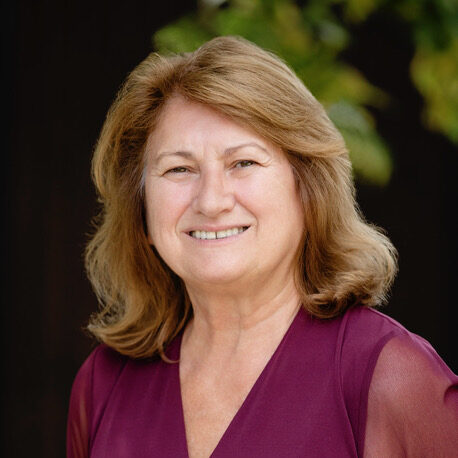
Dr Mary Kalantzis, Wollongong University
1991 Conference, Melbourne
Literacy for the participants here today is defined very broadly and it affects every aspect of life: from leisure to incarceration, from free-time to work-time, from libraries to theatre, from the needs of migrants to the needs of Koories, from the pedagogies of South American revolutionaries to home grown pedagogies. More
Dr Allan Luke, James Cook University of North Queensland
1992 Conference, Sydney
‘When basic skills and information processing just aren’t enough: rethinking reading in new times’
Dr Luke described the history of research into reading and presented a thought provoking model of ‘critical reading’ which he has developed with Dr Petter Freebody of Griffith University, Queensland. More
Associate Professor Peter Kell, RMIT University
1999 Conference, Melbourne
‘Open For Business: The Market, The State and Adult Literacy in Australia and beyond 2000’
In this address I will … provide a framework on which to reflect on the legacy that Arch and his generation left us and how it has been attacked by economic fundamentalists. Through a critical analysis of current developments in adult and vocational education I want to explore some of the fundamental shifts that have occurred in the context, nature and character of education and training. More
Isaac Brown
2003 Conference, Alice Springs
Daffodils are Yellow Magpie Geese.
Despite the intriguing title we are unable to locate a record of the actual presentation other than a reference to it in the Foreword to the Proceedings. ‘Isaac will explore his interactions with adult Indigenous literacy learners struggling with the why and wherefore of literacy in the Western construct.’

Dr Daryl Evans
2004 Conference, Melbourne
‘Changing Climates’
The adult literacy profession must be strong enough to change the climates within which we operate. However, at the same time, we have to show that we are flexible and professional in responding to changes in policies and procedures, including the changes that we don’t like.
Ten trivial pursuit questions – serious, not trivial… More
Jeff McMullen, Journalist
2006 Conference, Adelaide
‘Challenges of Literacy and Health in Indigenous Communities’
Many years work with Indigenous communities has convinced me that Australia’s greatest civil rights challenge is closing the racial gap in learning. It is the first step towards closing the gap between black and white life expectancy.
In this sense, literacy is about life. More
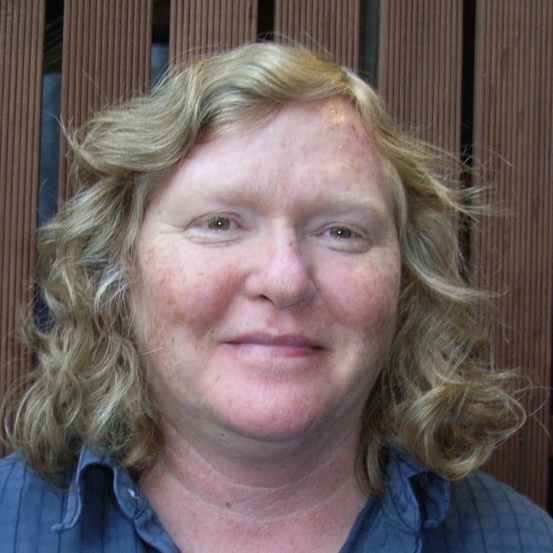
Dr Pauline O'Maley, Victoria University
2011 Conference, Melbourne
‘We make the road by walking’
When I first started working with adult literacy in a community setting I worked for a supported employment service, they were specialists at supporting folk with mental illness back into work, they did so in a wonderfully calm and inclusive environment. On my first day the manager of the service summed up simply what he saw as the work they did by saying ‘we walk along the road a little with people’. More
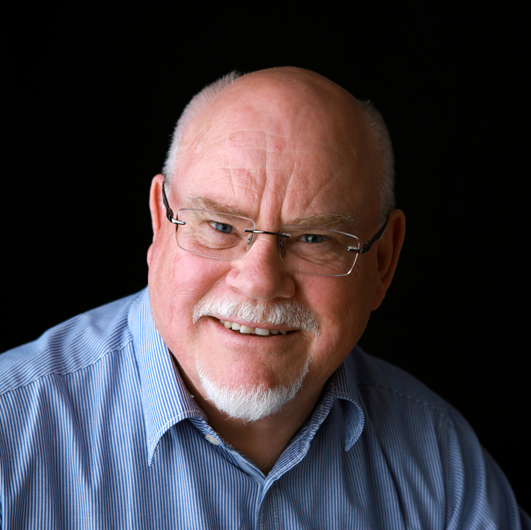
Dr Darryl Dymock, Griffith University
2014 Conference, Surfers Paradise
‘The Lure of Lifelong Learning’
Arch Nelson would have liked the concept of lifelong learning. …
Arch may not have been so happy with modern interpretations of the concept, however, with their emphasis on skills development and economic growth. More
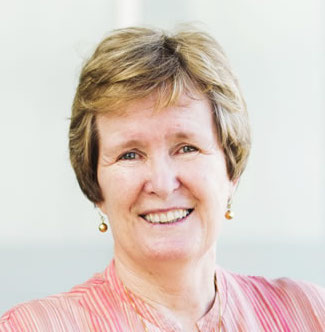
Prof Sue Shore, Charles Darwin University.
2015 Conference, Adelaide
‘Rethinking foundation skills and democratic responsibility with a little help from AJ Nelson’
‘Arch Nelson … was working with many to lead a breakaway movement that would leave a significant social fingerprint on Australian understandings of adult literacy. … Arch wrote: ‘I remain deeply concerned that, at a time when the gap between our “haves” and “have nots” is widening, our Australian democracy will become increasingly empty of meaning and purpose unless we give a very high priority to the developmental needs of those who are less literate and much disadvantaged in this and other ways’ …
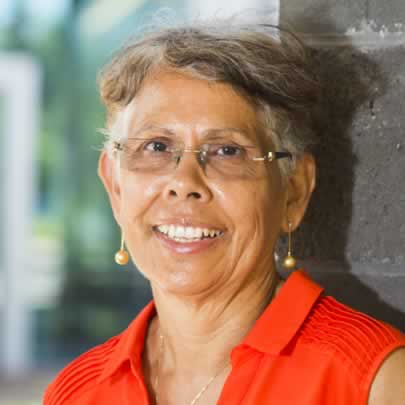
Heather D'Antoine, Menzies School of Health Research
2017 Conference, Darwin
‘‘To be or not to be … literate: A personal story’’
I was taken by surprise when Prof. Sue Shore invited me to do this. My immediate response was – I don’t do literacy, I work in health, which highlights the silo mentality of which some of us, obviously me, work in. For me personally, literacy has never been an issue. … I spent many a day in the library in Derby, one of the coolest spots in town, gaining a solid education and training in nursing that enabled me travel and work in WA and the NT and in Great Britain.
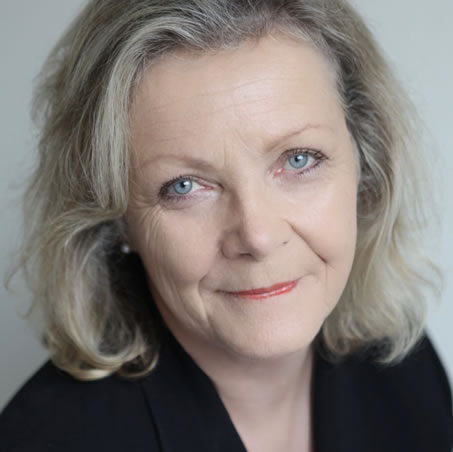
Lynne Matheson
2018 Conference, Melbourne
Cultivating ‘heart power’
Lynne used Arch Nelson’s memoir, to reflect on how our values are intrinsic to our professional identity and how we live them serves our students and by extension, society. She reflected on the words of key figures in the LLN landscape … that tell the stories from the field and their transformative effects on the lives of students.
The force of Arch Nelson’s concern for people, his ‘heart power’ as demonstrated in the stewardship of ACAL was acknowledged and celebrated. More

Assoc Prof. Bob Boughton, University of New England
2019 Conference, Sydney
Arch Nelson and the end of the ‘great tradition’
What does university adult education today have to offer the 800 million people around the world who have not even had the most basic education, the people who cannot read and write in an official language of their own countries? To build a practice and a theory which can take us forward, I argue we must to put the liberal tradition aside, and connect instead with the tradition of adult education for revolutionary transformation, led now as it always has been, by the popular education movement of the Global South. More

Pam Osmond
2020 AGM, Online
At a recent ACAL pre-conference workshop in Sydney, participants discussed how we might ‘weave a richer narrative of adult literacy and numeracy’.There seemed to be agreement that the present foundation skills discourse and available provision reflect a very restricted narrative and that it might be time to re-consider and re-imagine what an alternative, richer and more inclusive narrative might look like. This presentation elaborates on some of the suggestions and blue-sky thinking from that session, and relate it to Arch Nelson’s vision of a community development approach to adult basic education.
Paper, Video, PowerPoint
Lorraine Sushames
2021 AGM, Online
Moments in time – tensions, trajectories and intersections
More
Caralyn Lammas
2022 AGM, Online
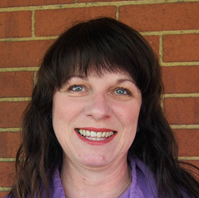
Women’s Education – making a difference
Firstly, I will share what it means to me to be an educator of women. I will then discuss the background, purpose and scope of the TAFE SA Women’s Education program, and the transformative effect it has on students. I will conclude by explaining why women’s education is necessary and what happens in families, communities and societies when women are educated. As I progress from myself to the classroom to the wider world, I’ll take Arch Nelson with me. More
Dave Tout, Australian Council for Educational Research, education consultant
2023 Conference, Adelaide
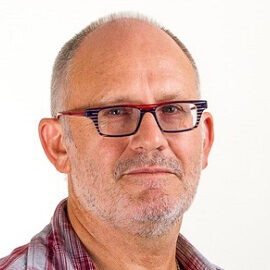
Some reflections and connections: growth and support needed for a critical and dynamic adult literacy and numeracy sector
Dave will take a look backwards first, before looking forwards – where have we as an adult literacy (and numeracy) field come from and where have we got to? Where do we need to go? Dave will reflect on his long, serendipitous journey within the adult literacy and numeracy sector in Australia, and internationally, and share some of what he has learnt along the way, especially about the importance of connections, determination, and passion.
Lyn Wilson
2025 Conference, Melbourne
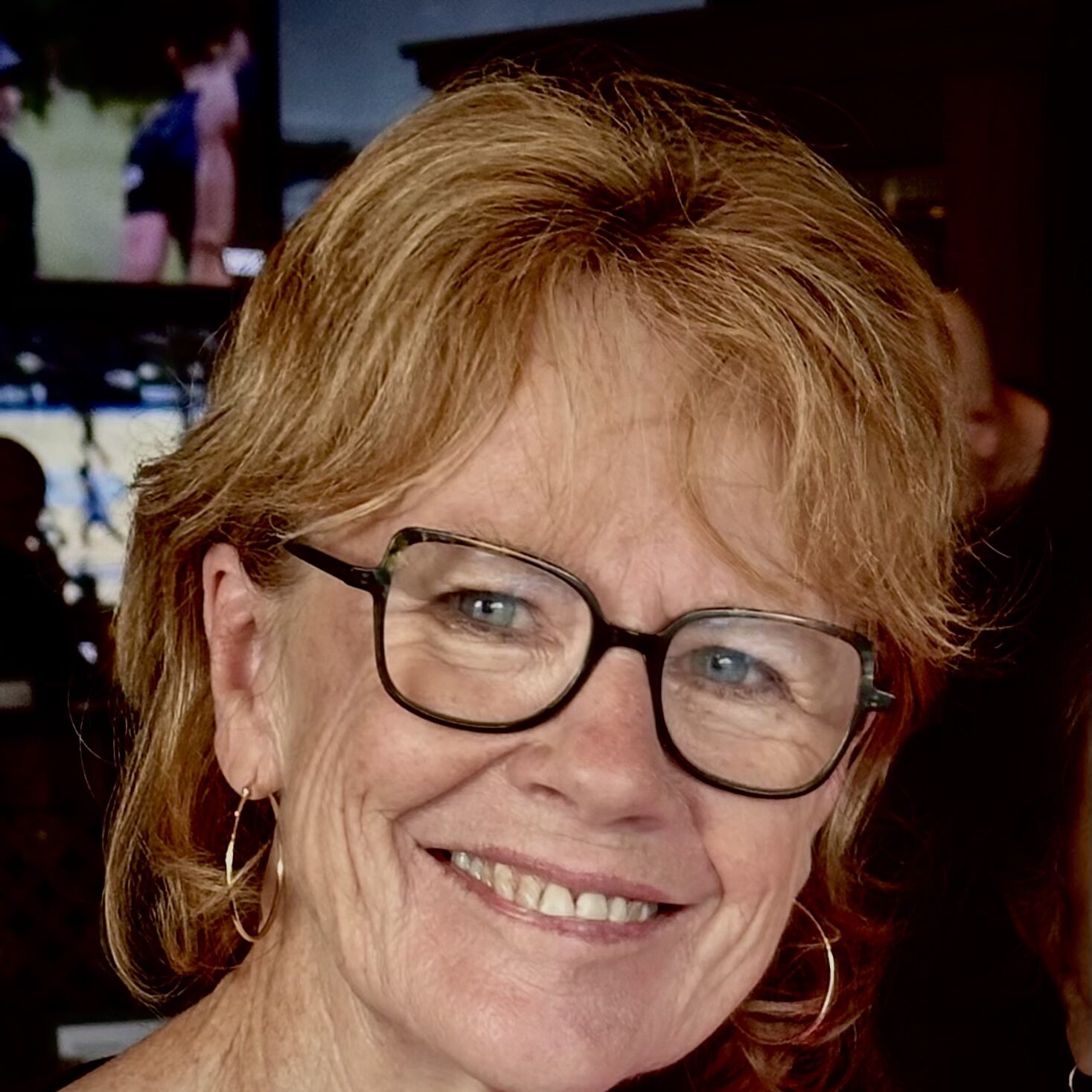
Addressing diverse needs: Rethinking the future of adult literacy education
Who are our adult literacy/numeracy learners in 2025, and who are we still leaving behind? What opportunities is our sector missing to address the quantifiably unknown literacy & numeracy needs of English-speaking adults and First Nations people? More